Choosing the right desk size
Start here when the room is measured but the width, depth, or folding choice is still unclear.
This hub is for planning the whole setup before buying: desk size, chair clearance, monitor distance, cable routes, and how the room still works when the laptop is closed.
Use these broad guides first if you are choosing the main parts of a compact workspace.
Desk size
Start here when the available wall is short and you need the smallest usable desk.
Read next
Chair shortlist
Compare chairs with backs designed to fold lower under a desk.
Read next
Room planning
Work out chair clearance and walking space before furniture blocks the room.
Read next
Choose the guide path based on the decision you are trying to make, then move into reviews once the constraints are clear.
Start here when the room is measured but the width, depth, or folding choice is still unclear.
Use these for rooms that still need to work as bedrooms, storage spaces, or guest rooms.
Check the full room footprint before bringing a heavier standing desk into a tight space.
Finish the setup by checking what clears the desk, frees depth, and keeps cables under control.
Buying guides, comparisons, and setup guides for compact UK workspaces.
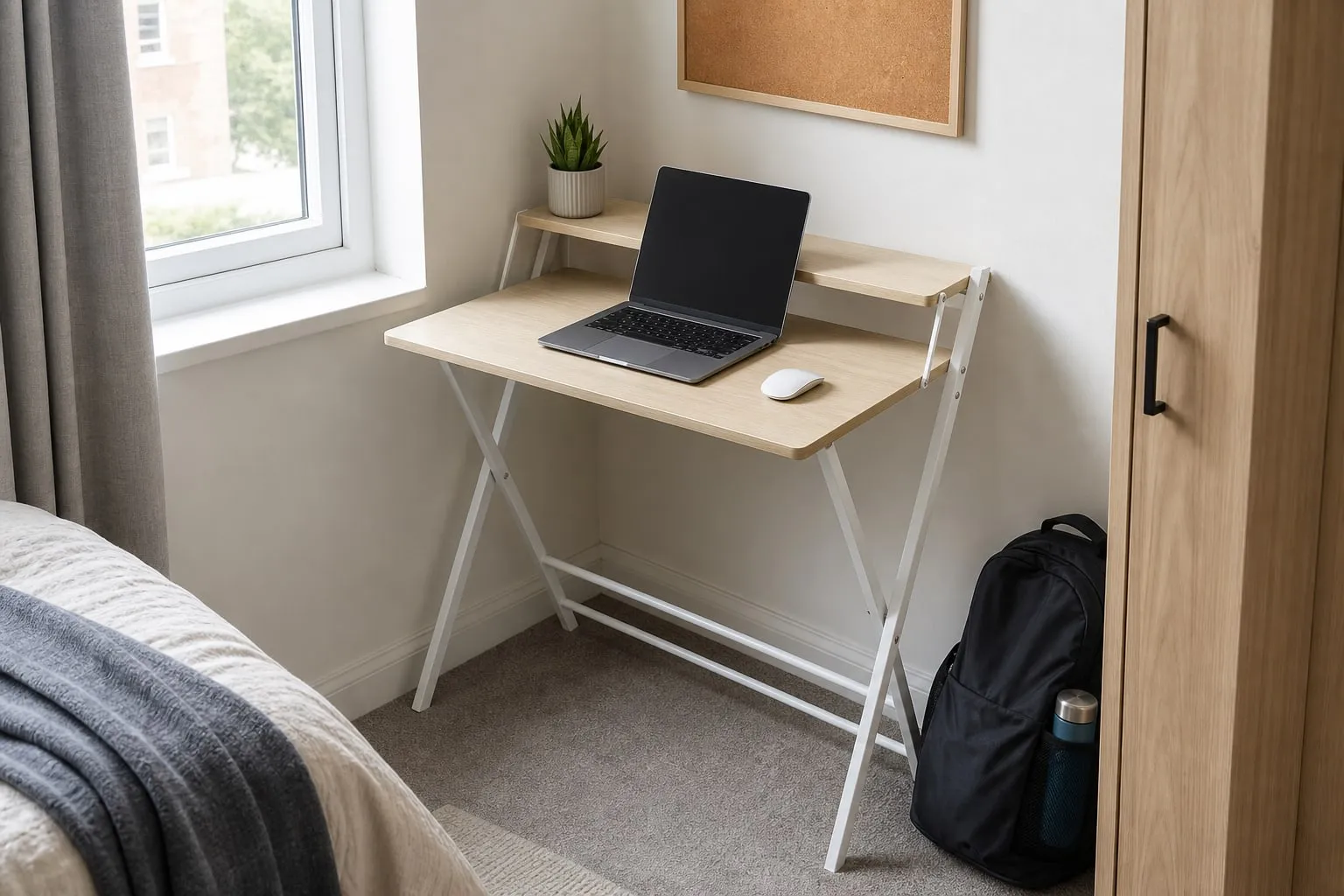
A 60cm desk fits the tightest gap, but 80cm is much easier to use. Compare laptop space, chair fit and room clearance before choosing.
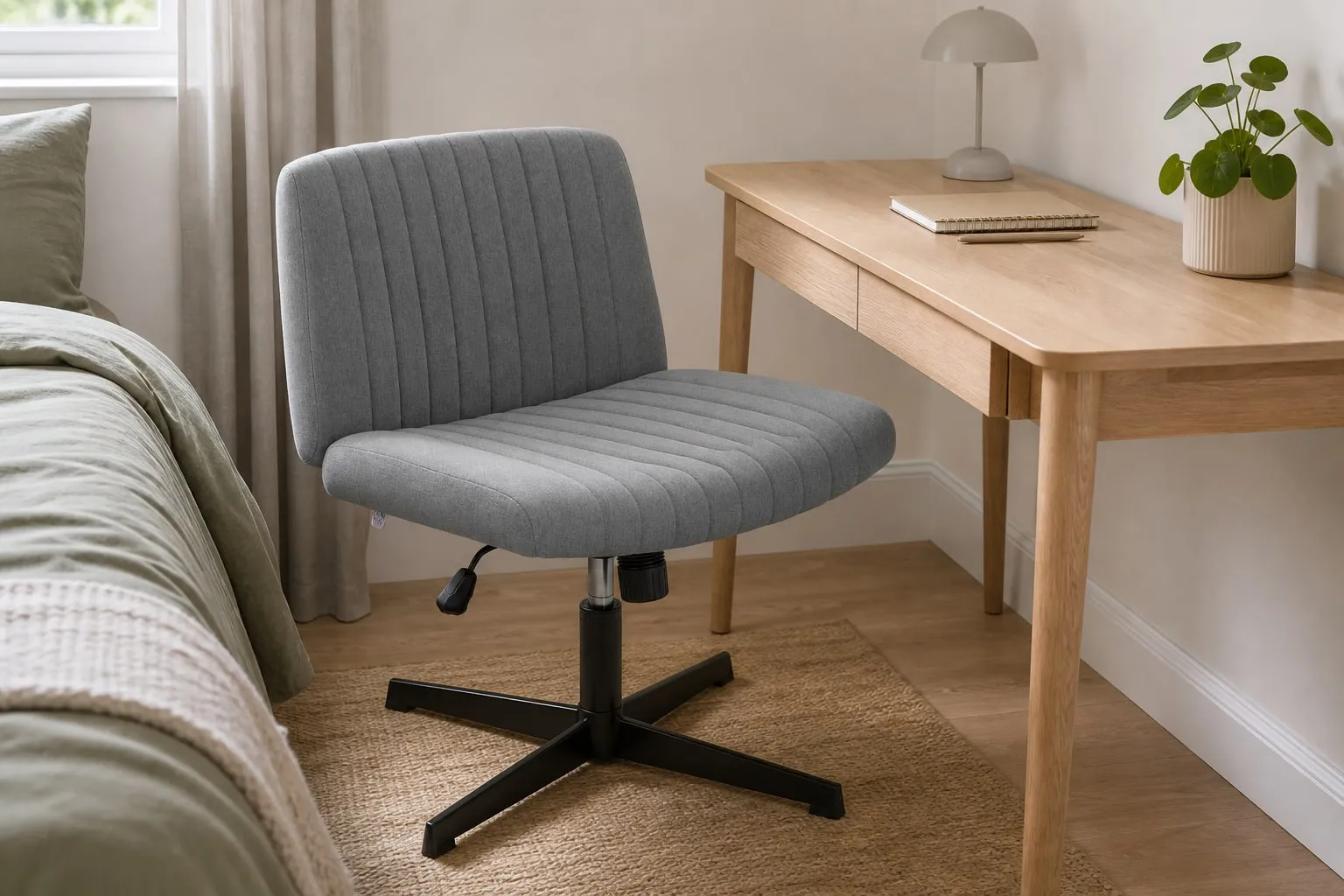
Cross-legged office chairs look comfortable and uncluttered, but wide seats and fixed bases create real trade-offs for posture and small rooms.
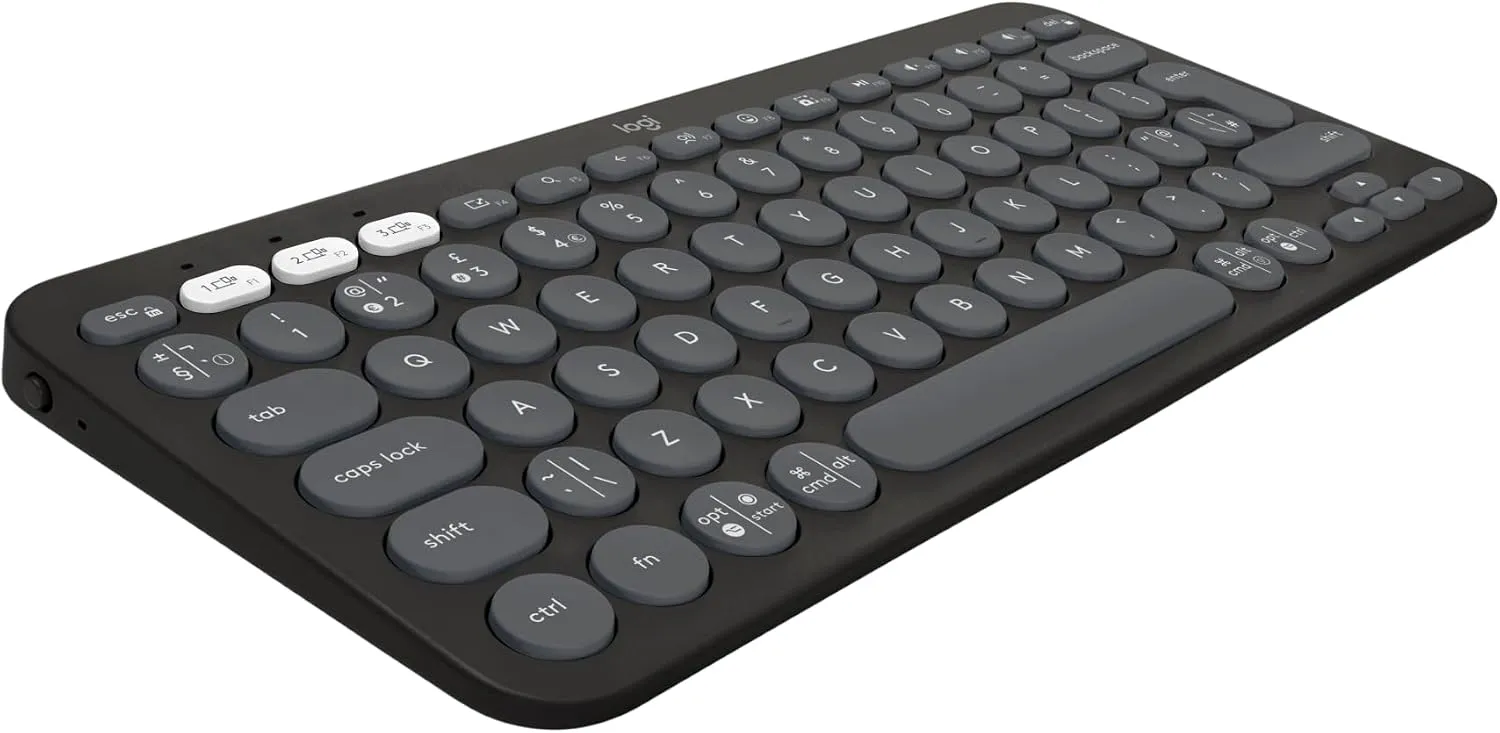
Four compact UK-layout keyboards that create real mouse space, from a £20 Bluetooth board to a premium low-profile mechanical option.
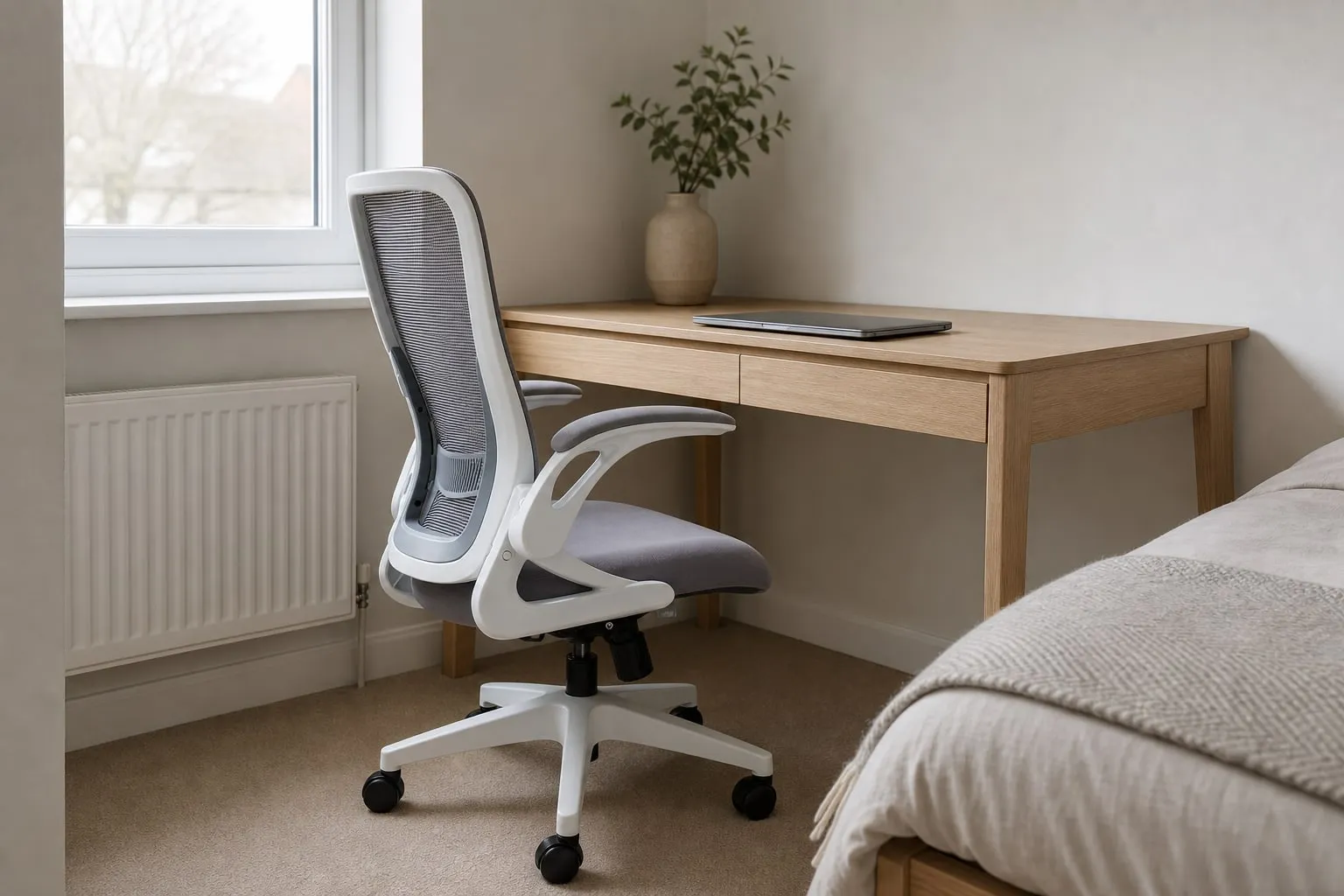
Folding-back office chairs sit lower under a desk than flip-up-arm models. These are the branded options worth considering for compact UK rooms.
Allow about 75cm for a chair in use and 90cm or more for a comfortable route behind it. Here is how to measure a compact room properly.
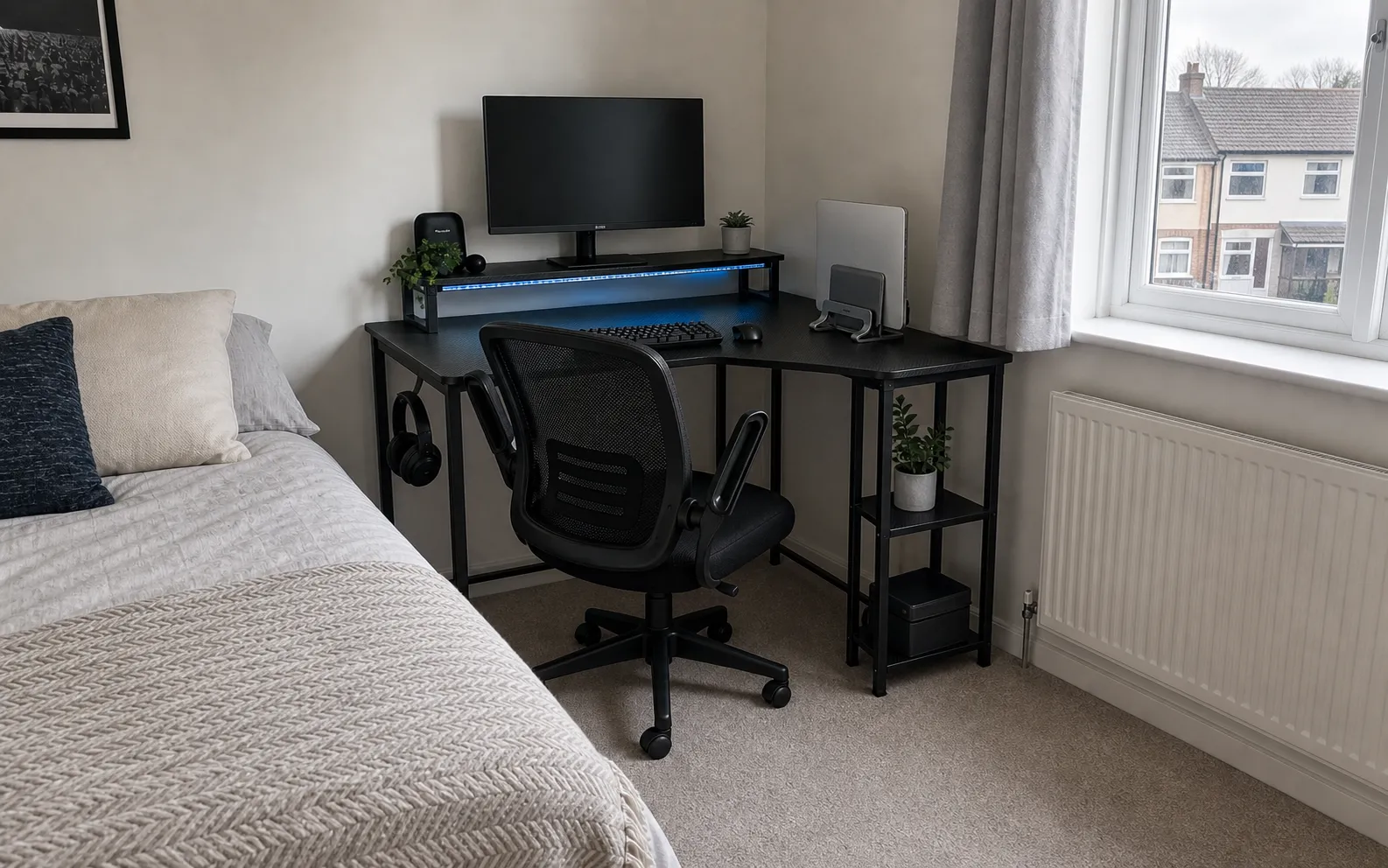
A practical guide to planning a small corner desk setup in a UK bedroom, from measurements and chair clearance to monitor, laptop, and cable choices.
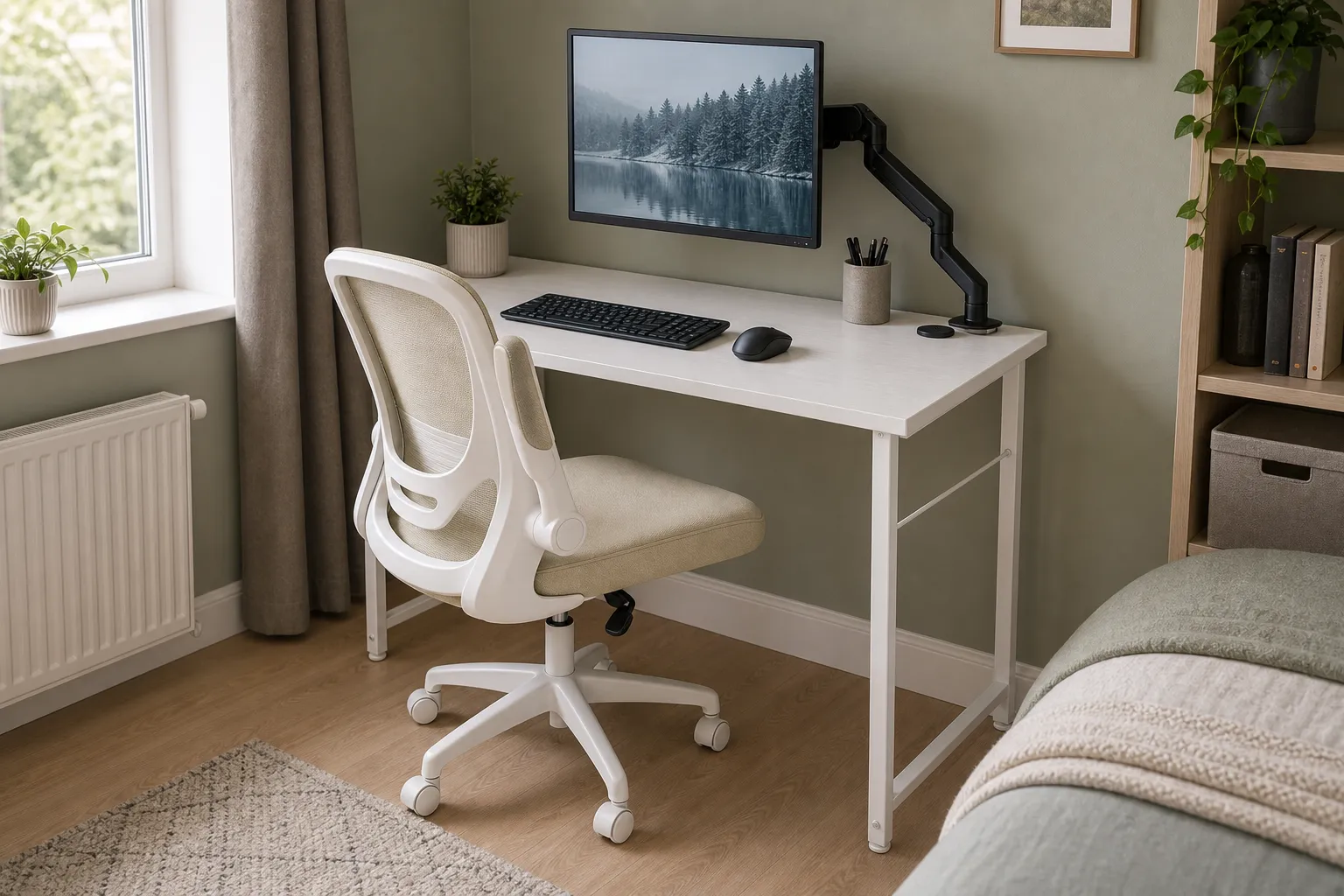
How to build a usable 80cm desk setup in a small bedroom with the right chair, monitor arm, lighting, and cable layout.
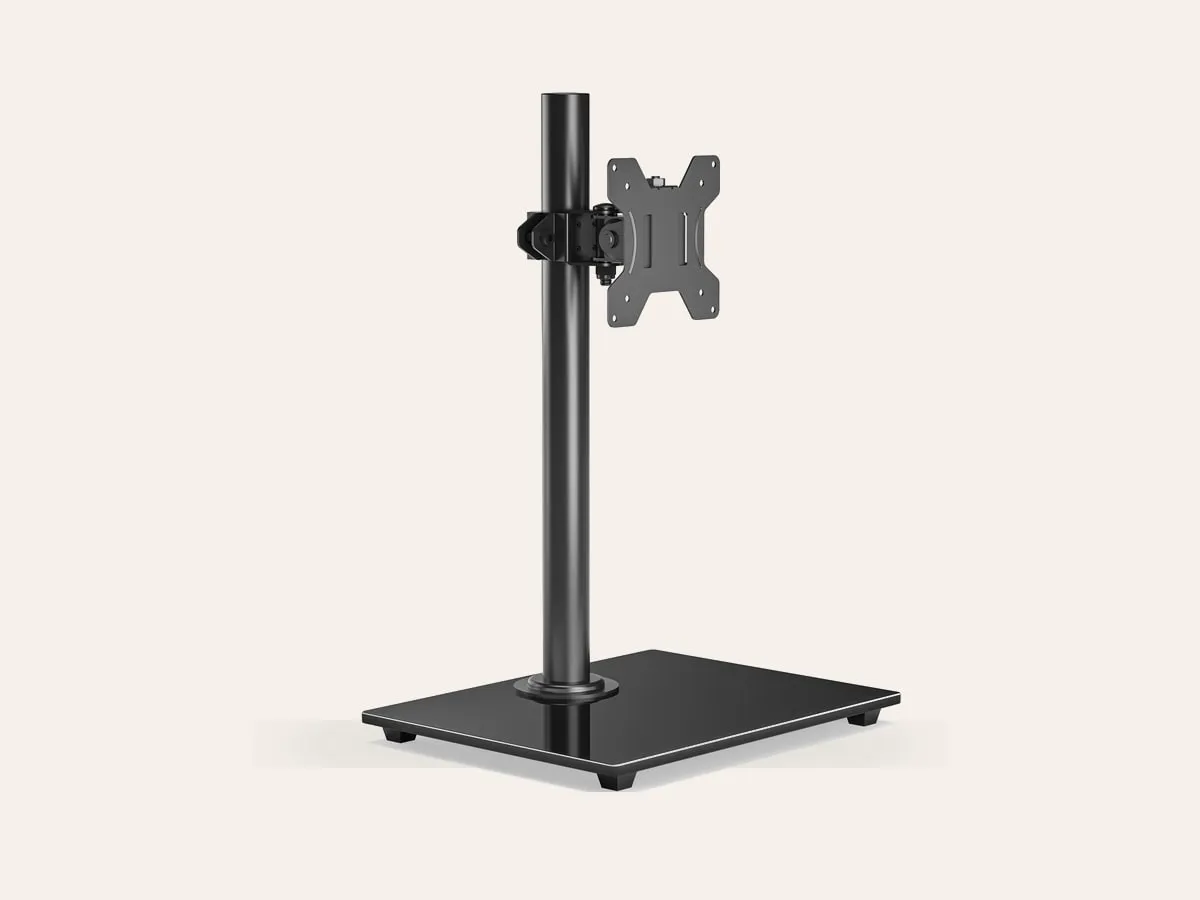
The monitor arms and stand options that make sense when a compact desk needs more usable depth, not more furniture.
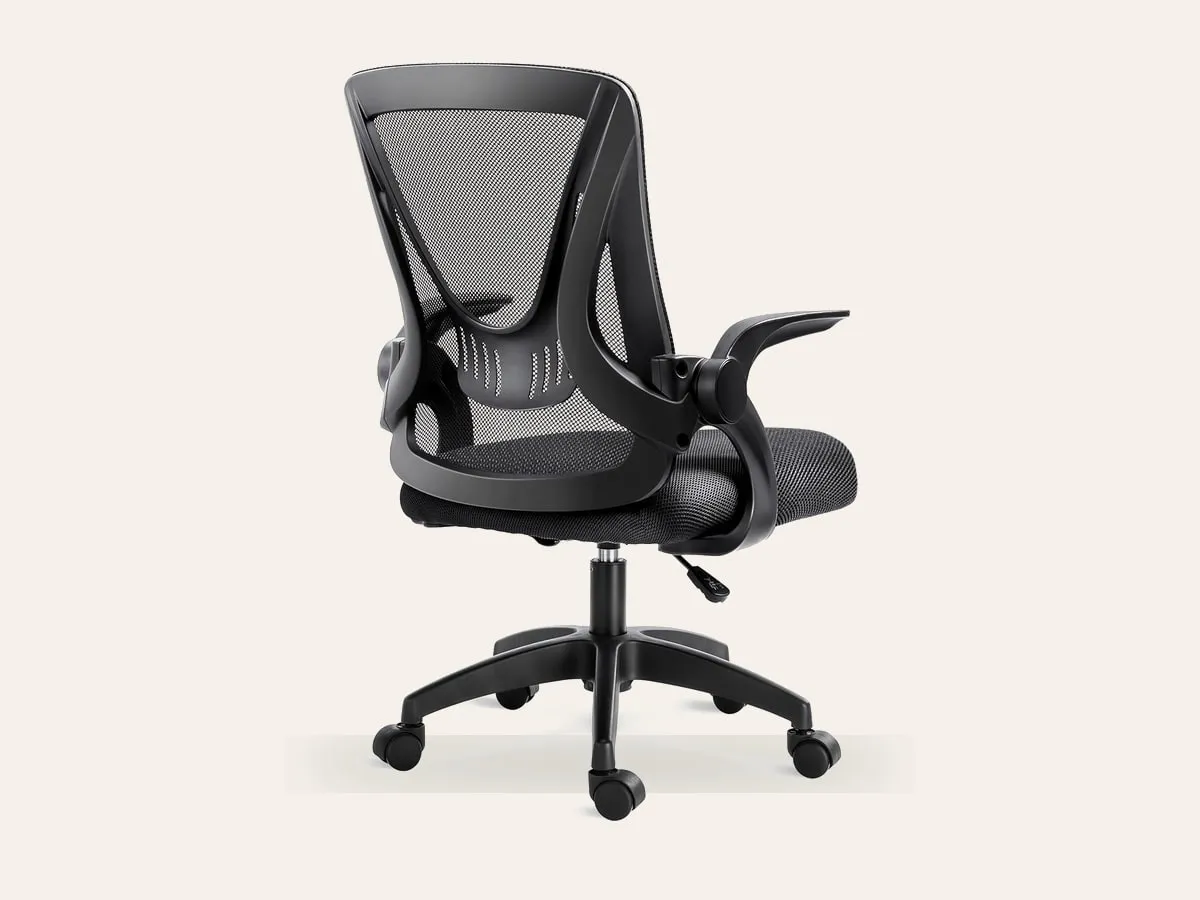
Flip-up arms can make a small desk setup much easier to live with. These are the compact UK chair options worth shortlisting.
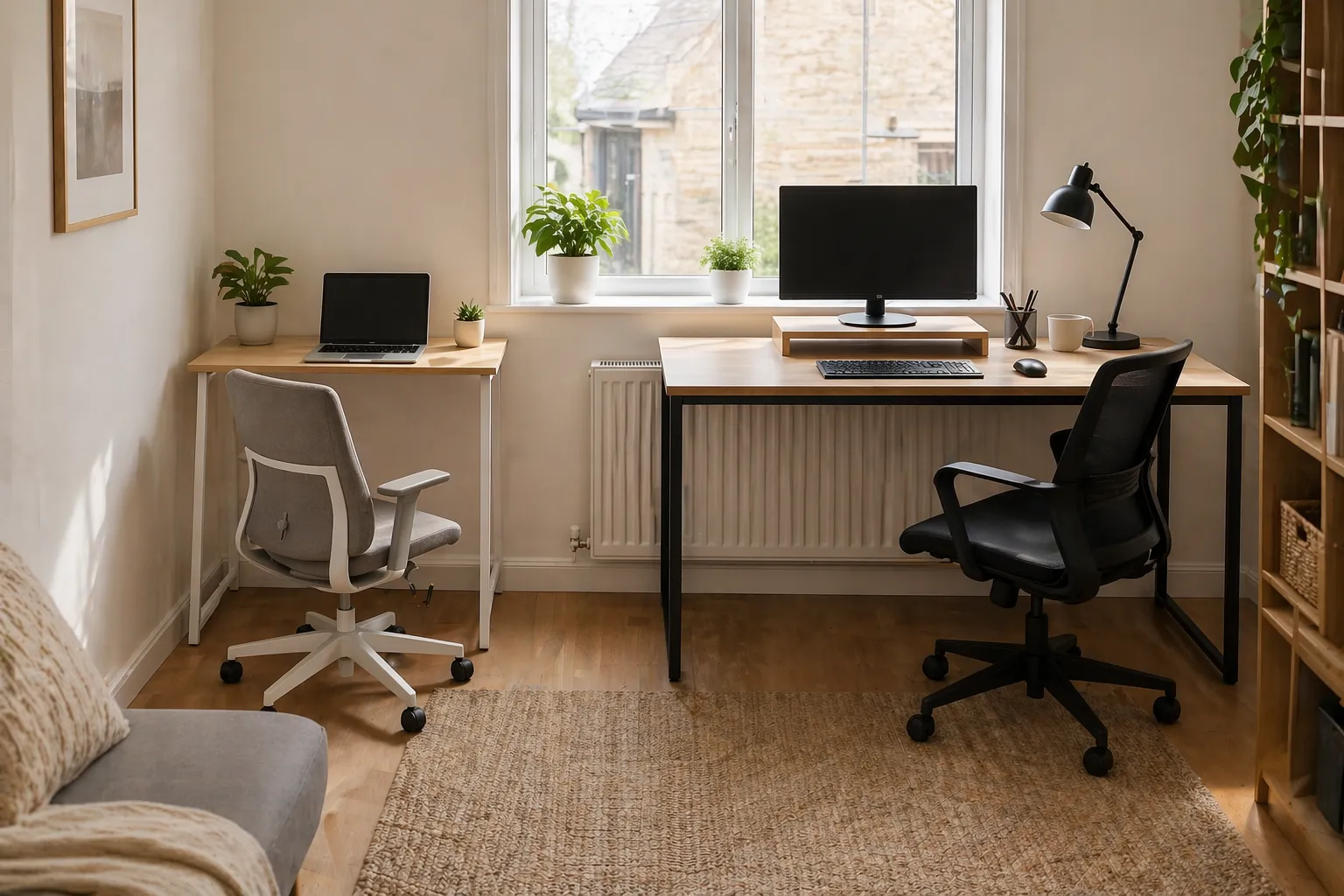
An 80cm desk can save a small room, but a 100cm desk is usually easier to use. Here's how to choose the right one.
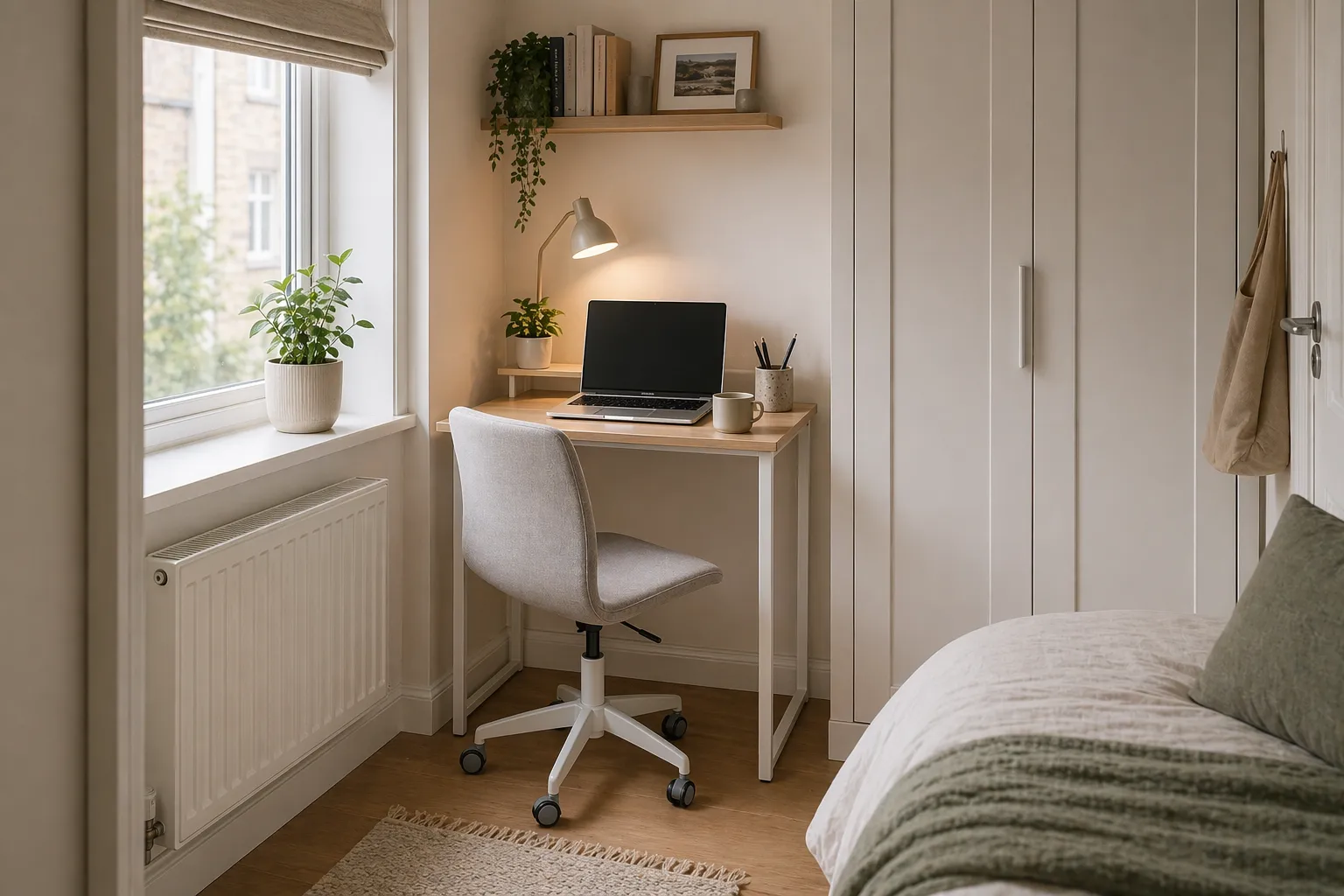
The genuinely compact desks worth considering in the UK when even a 100cm desk feels too wide for the room.
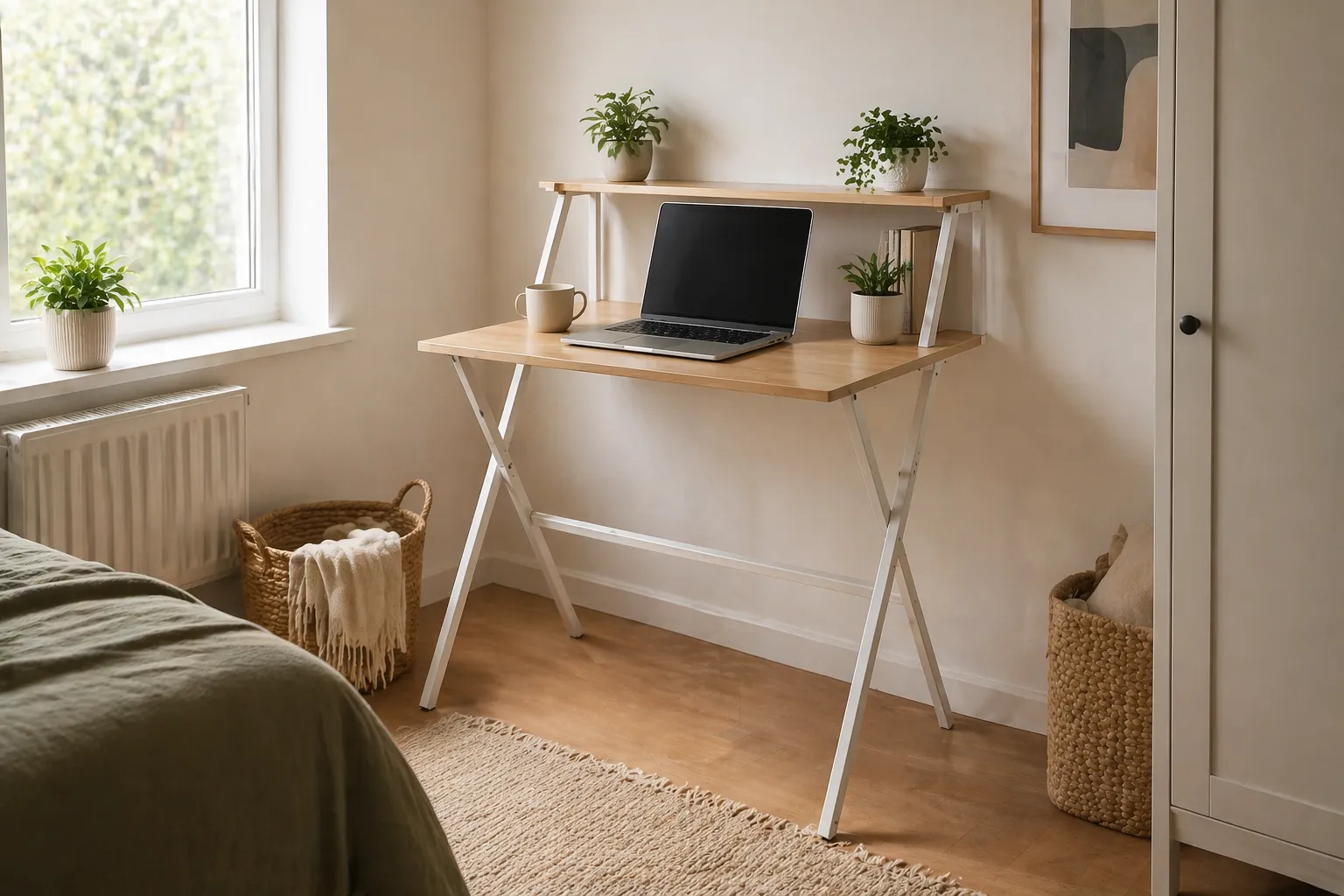
The folding desks that make the most sense in small UK rooms when a permanent workstation would just get in the way.
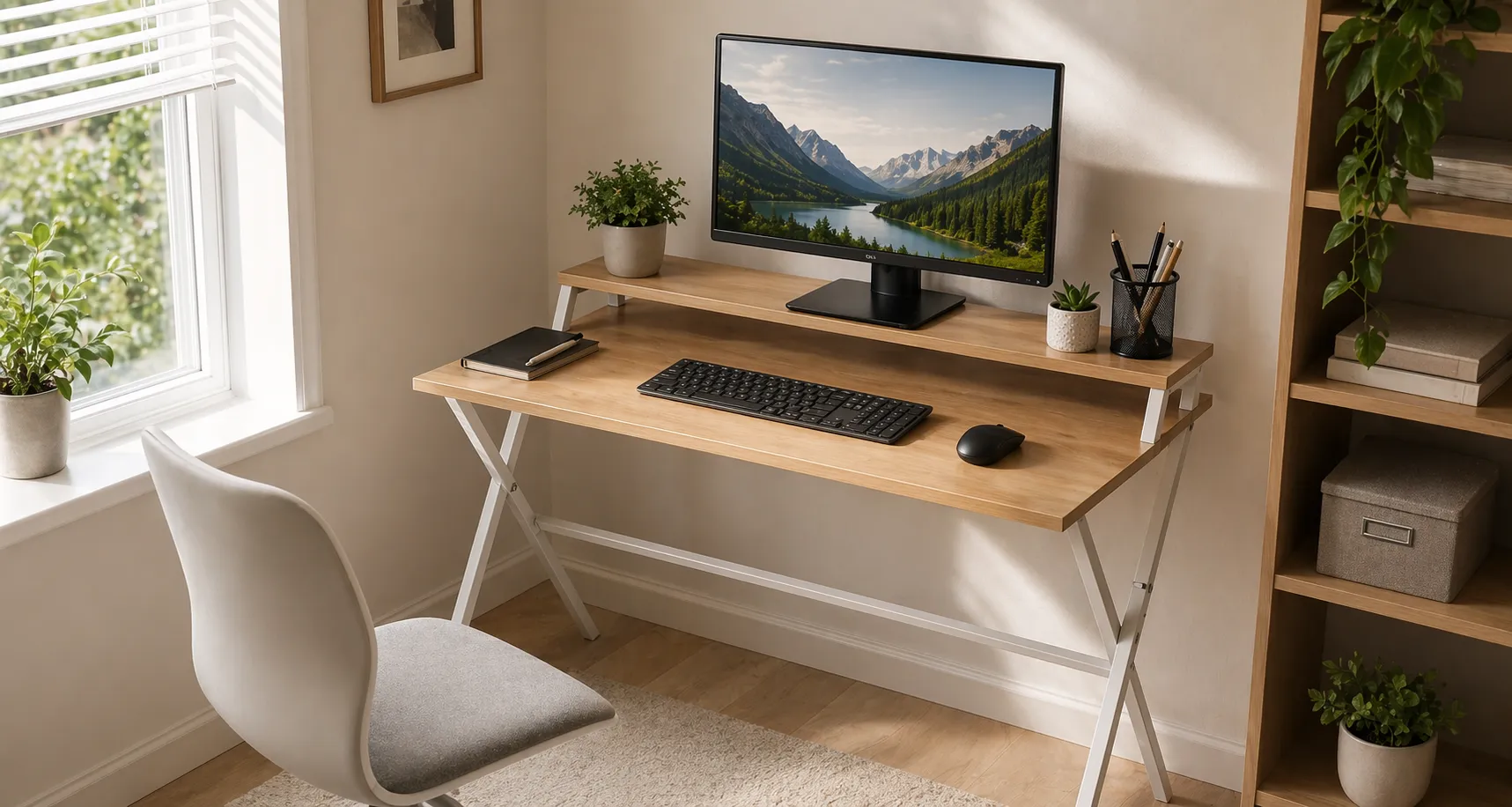
A 24-inch monitor can work on a small desk, but desk depth matters more than most people expect. Here is the practical answer.
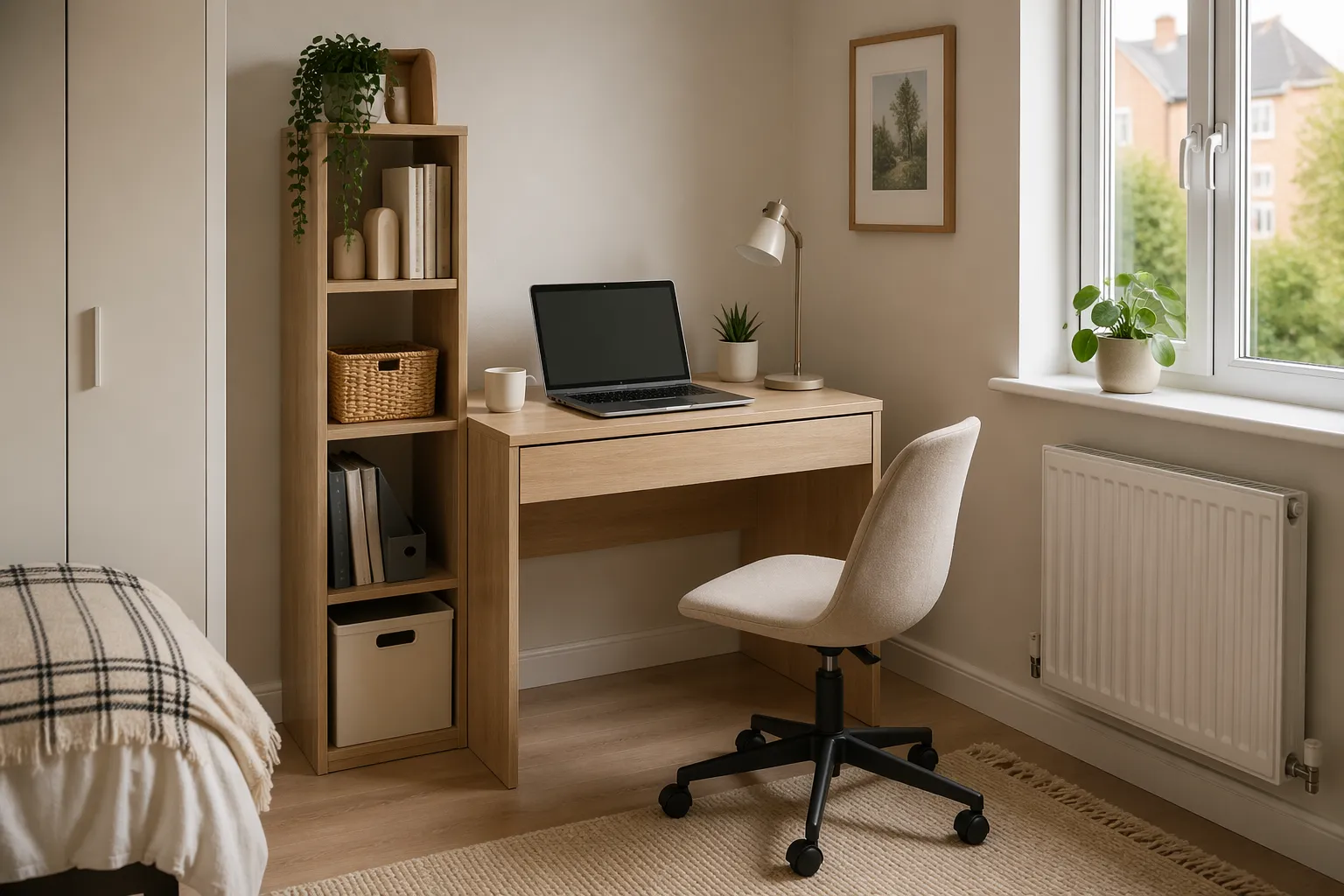
The small desks worth buying in the UK right now if you need under 100cm widths, built-in storage, or a setup that stays easy to live with.
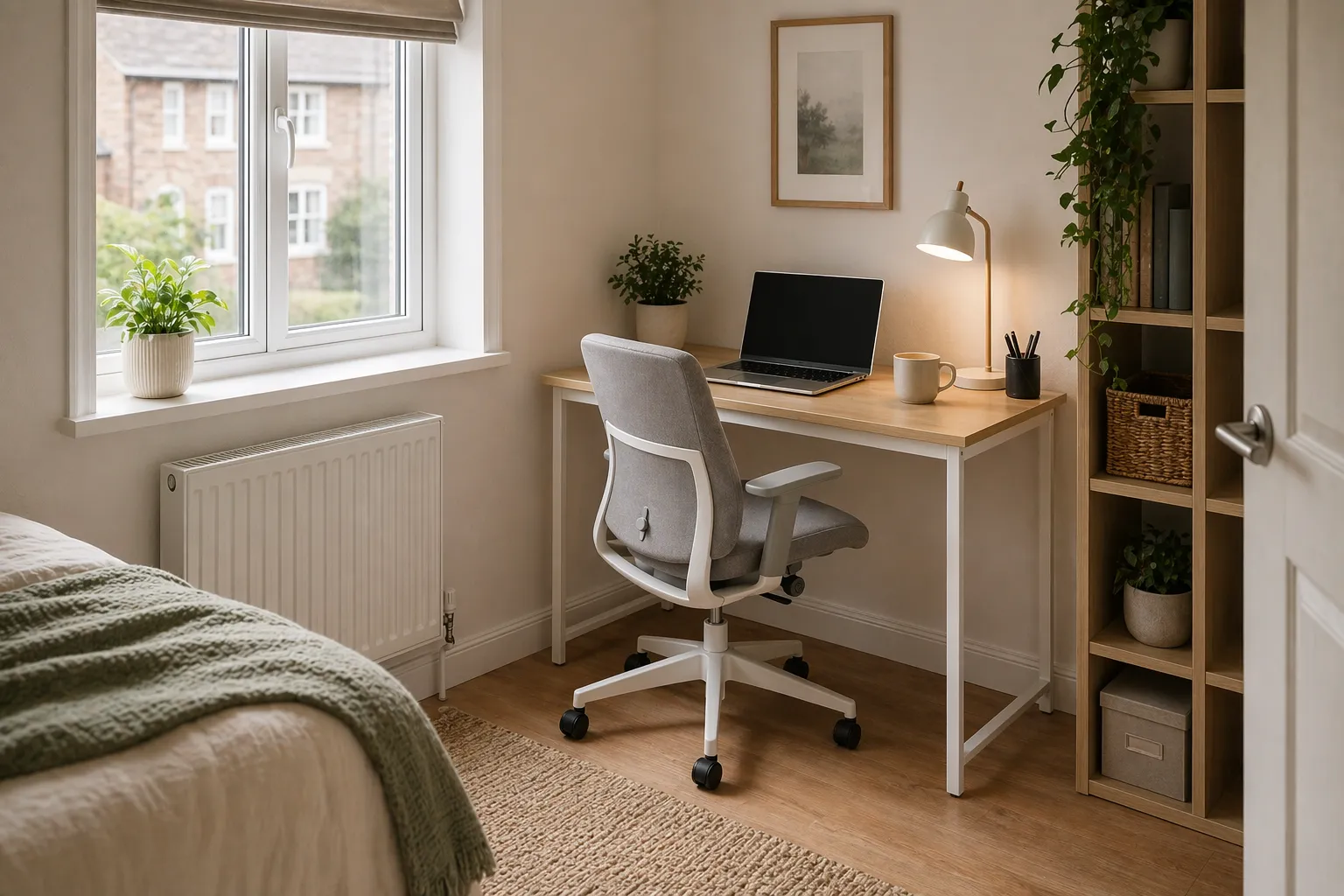
Compact office chairs that make sense in small UK homes, with picks that tuck under desks, keep the footprint reasonable, and feel easy to live with.
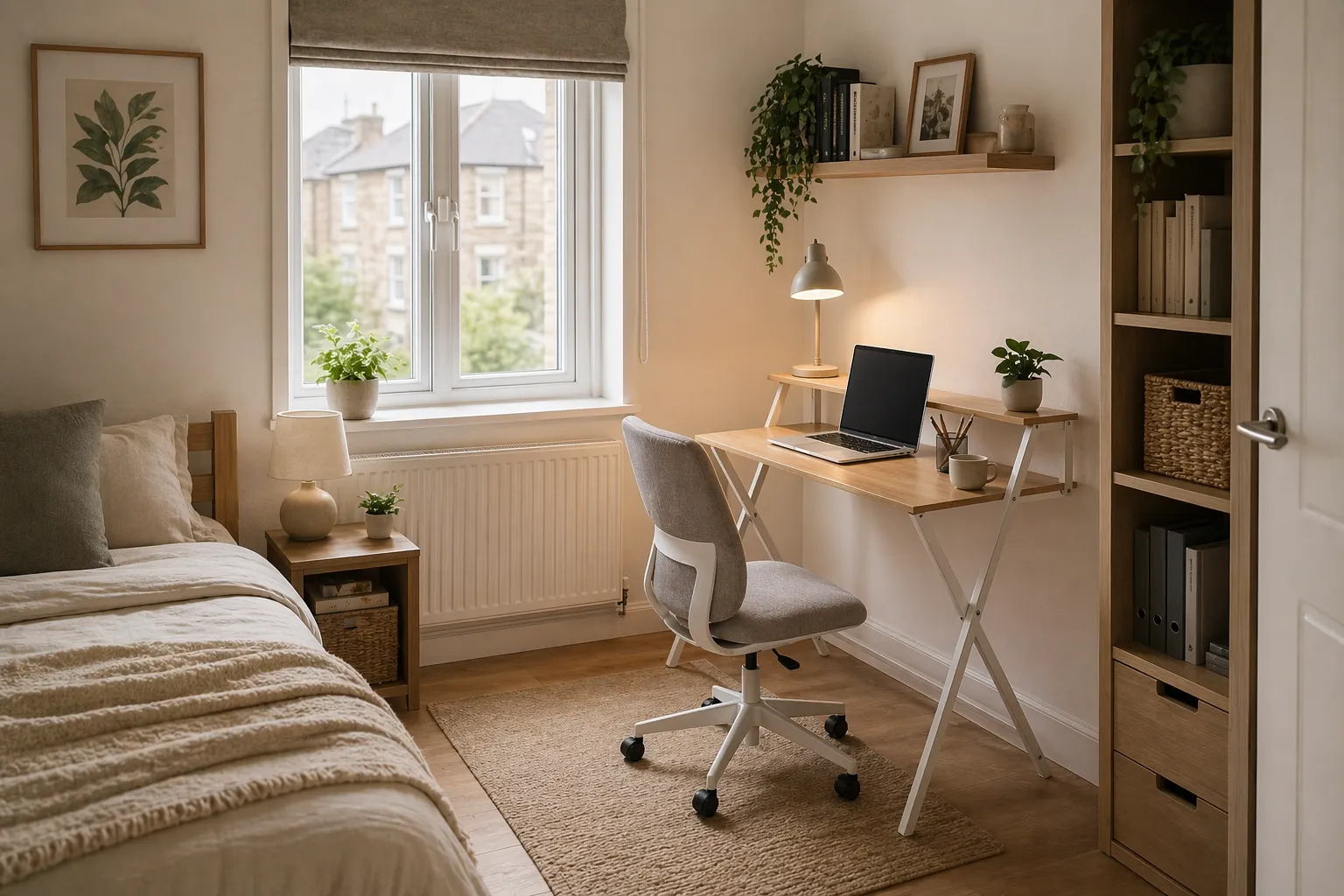
Three practical small bedroom desk setups you can copy in the UK, with compact desks, chairs, and storage choices that fit normal homes.
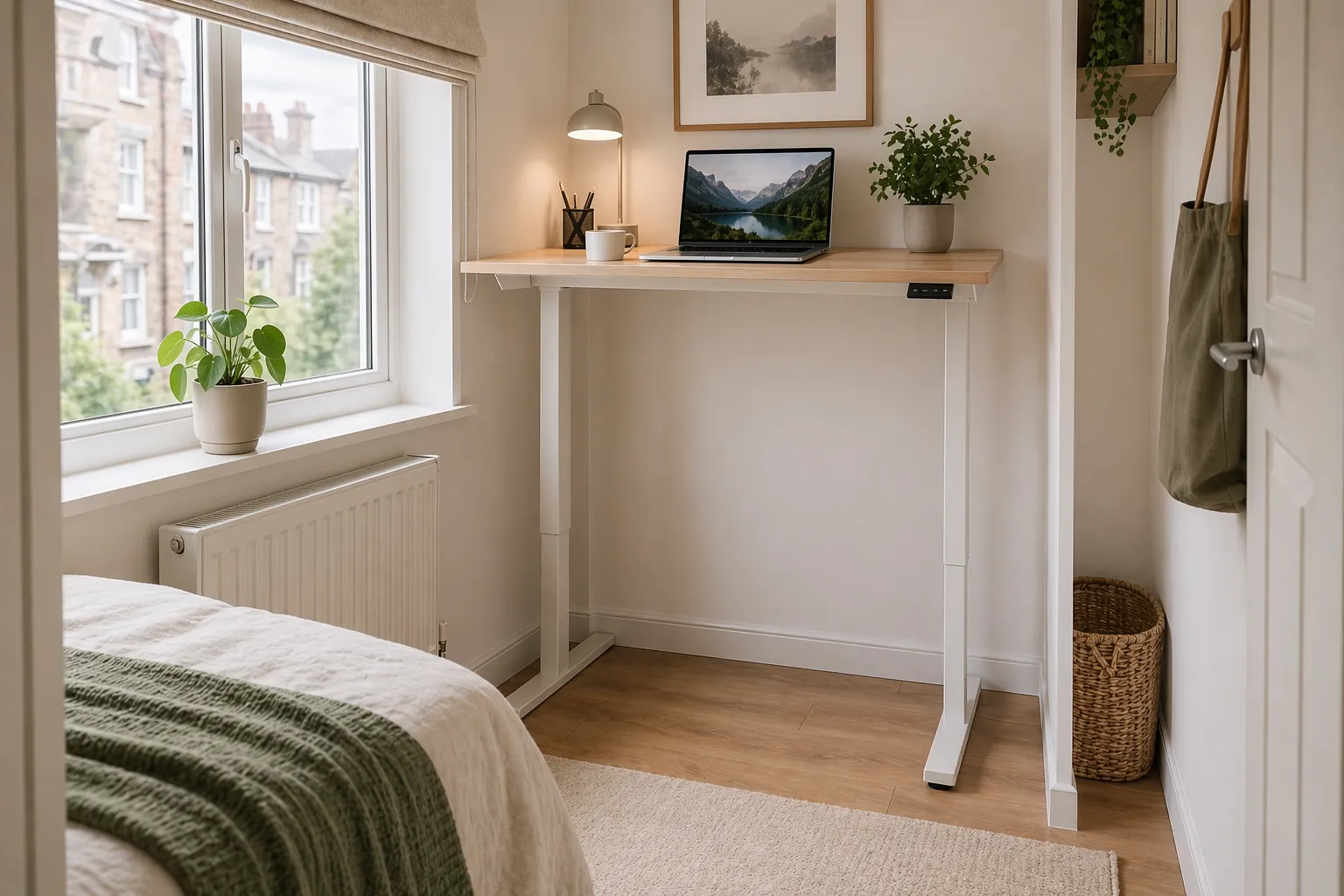
Most standing desk advice assumes a home office bigger than most British flats. Here's how to actually measure, plan, and fit one into a box room.
These reviews pair naturally with the guides above because they cover common compact-room choices: a tiny desk, a folding desk, a 100cm desk, a tuck-away chair, a monitor arm, and vertical laptop storage.
The Tervo Model U folds under a desk, but is it worth £129.99? A practical review for bedrooms, box rooms and compact UK offices.
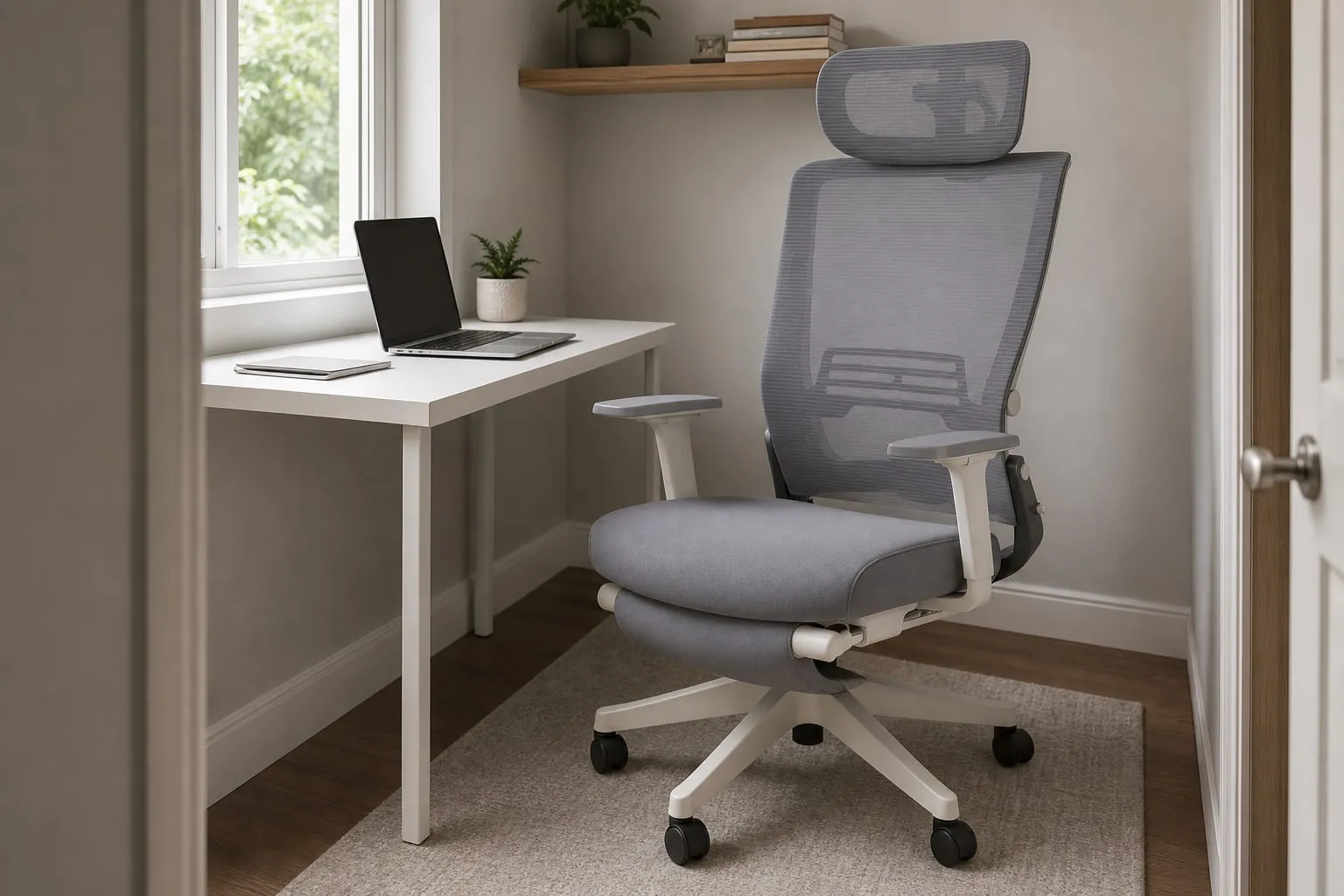
The FlexiSpot Foldex combines a folding back, headrest and footrest. Here is where it works, where it feels bulky and whether it suits small rooms.
HOMCOM's armless cross-legged office chair looks tidy in a bedroom, but its 65cm seat is wider than many task chairs. Here is the real trade-off.
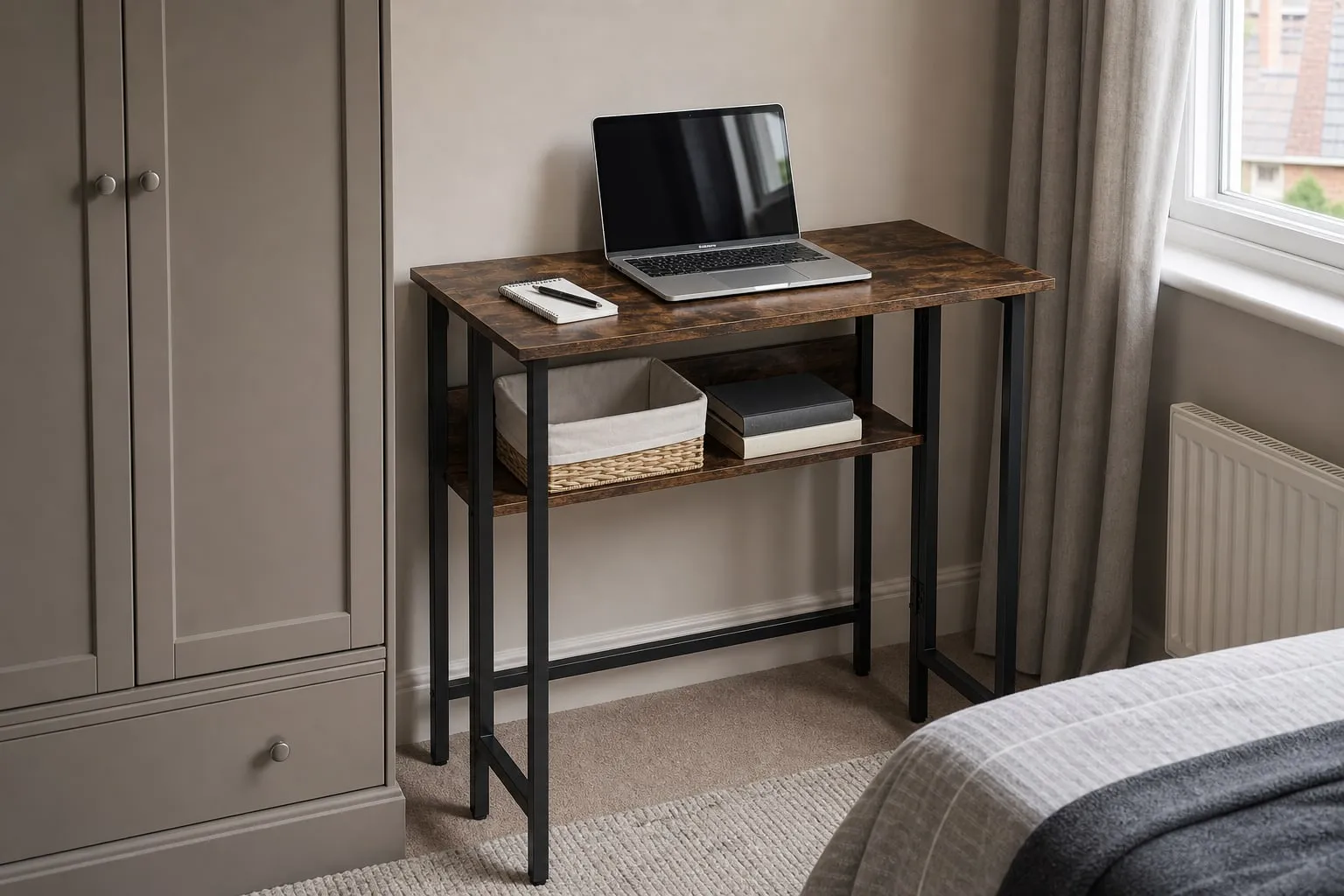
COSTWAY's 80cm folding desk adds a drop-leaf top and storage shelf for £42.95. A practical look at its fit in bedrooms and flexible rooms.
A review of the Yaheetech 80cm foldable desk with monitor shelf, including its small-room fit, 40cm-style limitations and £41.99 price.
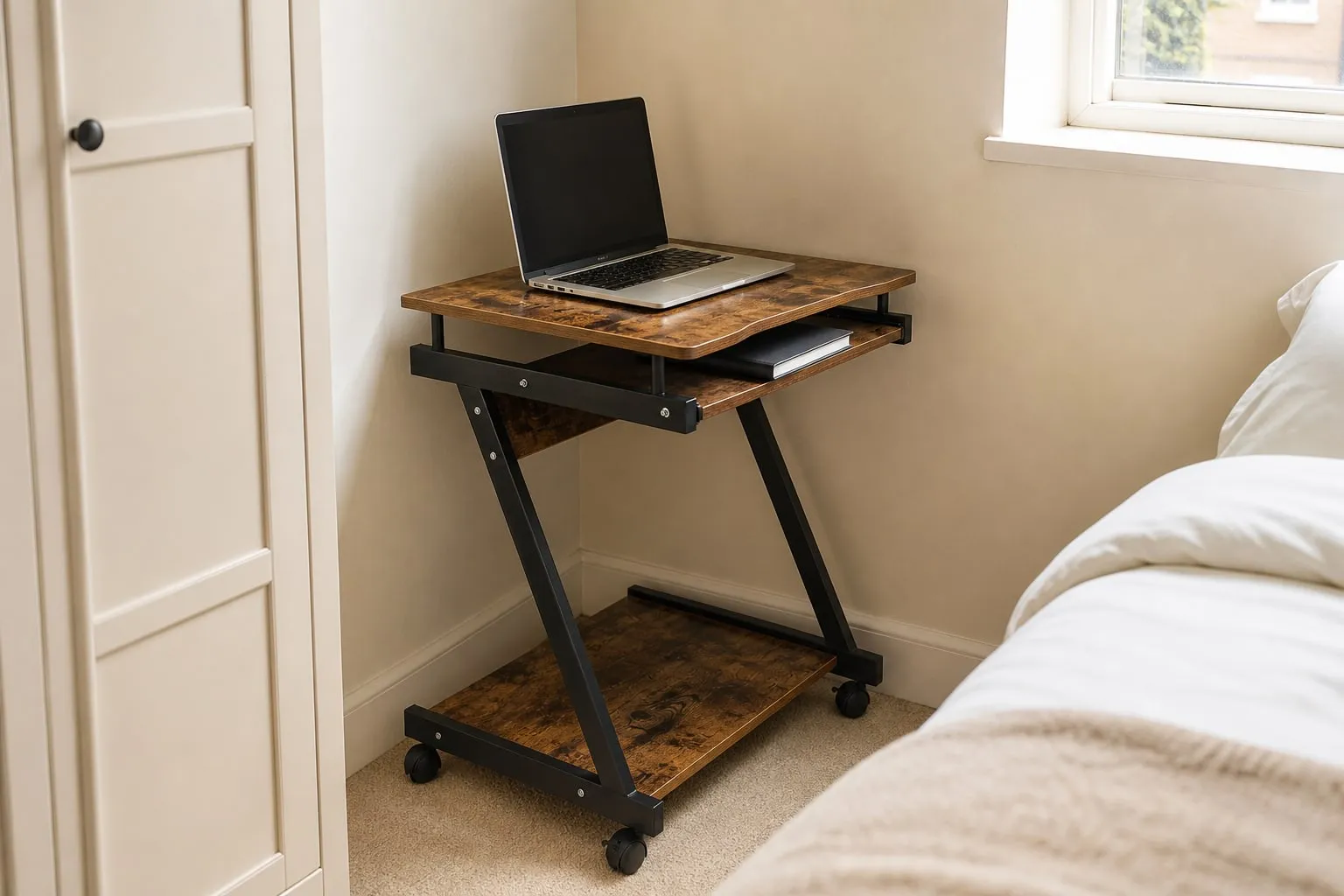
The SONGMICS Z-shaped desk is only 60 x 48cm and rolls on locking wheels. Here is who can live with such a small desktop and who cannot.
Work from the room outward. Measure the usable wall, door swing, radiator gap, socket position, wardrobe access, and chair path before choosing furniture. For most compact setups, the order is desk footprint first, chair clearance second, monitor distance third, then storage and cable control. That sequence keeps the room usable instead of turning every purchase into a fix for the last one.
Once the layout path is clear, use the product hubs to compare the actual desks, chairs, and accessories.
Desk hub
Use the desk hub if you already know the room constraints and want product reviews.
Read next
Chair hub
Use the chair hub for tuck-away options, ergonomic picks, and compact footprints.
Read next
Accessory hub
Use the accessory hub for monitor arms, laptop stands, cable trays, lighting, and keyboards.
Read next