80cm vs 100cm Desk: Which Is Better for a Small Room?
An 80cm desk can save a small room, but a 100cm desk is usually easier to use. Here's how to choose the right one.
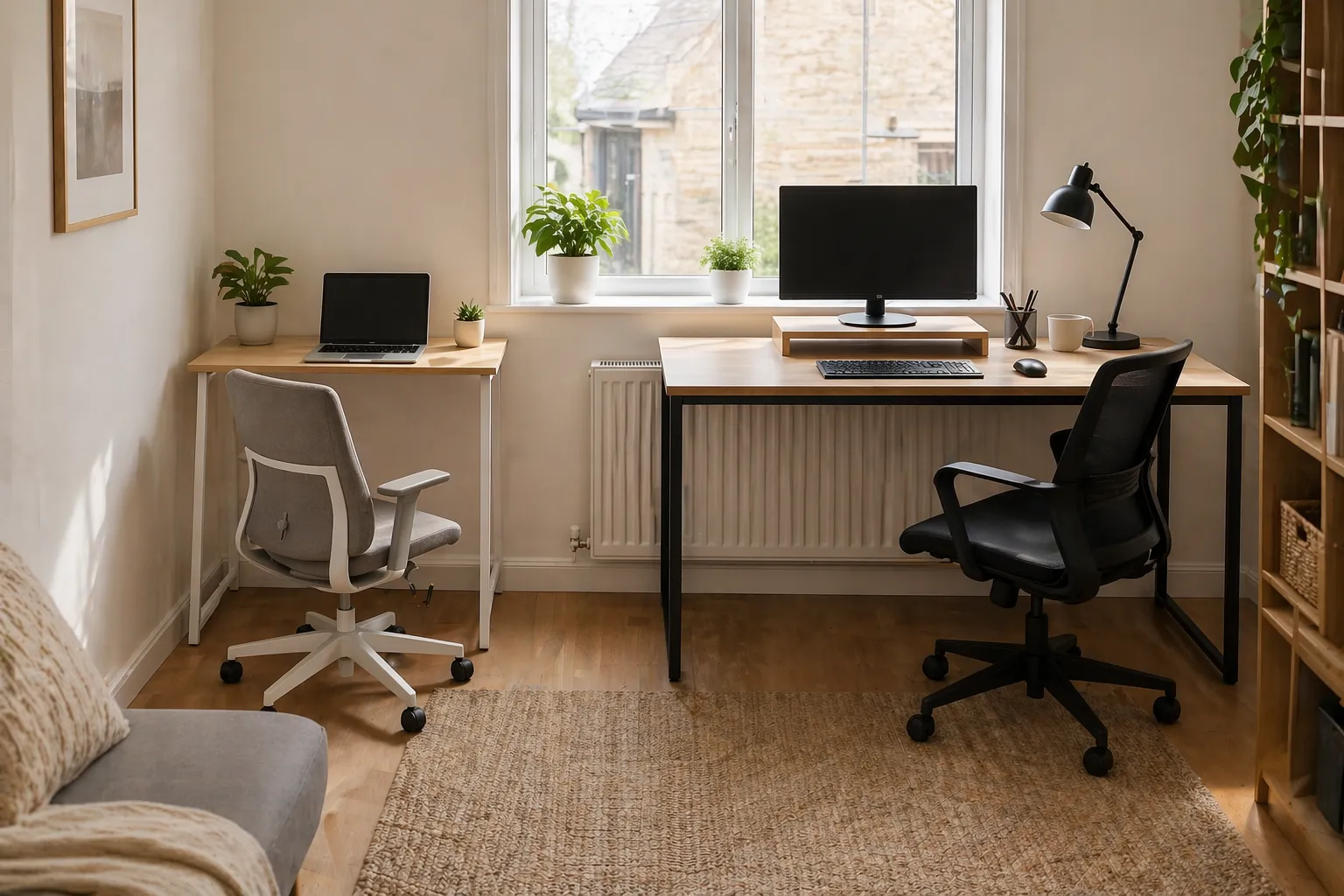
This is one of those choices that looks small on paper and feels big in real life.
An extra 20cm of desk width does not sound dramatic until you are trying to fit a chair between the bed and the wardrobe, or until you spend a week working on a surface that feels just a bit too cramped. In small rooms, both things can be true at once.
The short version is simple:
- 80cm is better if the room is genuinely tight, the desk may need to fold away, or you are building a laptop-first setup
- 100cm is better if the desk will stay out full time and you want a setup that feels easier to use every day
That is the whole decision for most people.
Why 80cm works
An 80cm desk earns its place by being easier to fit and easier to live around.
This is the size that starts to make sense in:
- box rooms
- spare bedrooms
- corners beside wardrobes
- multi-use rooms where the desk cannot dominate the floor
A good 80cm desk usually suits one of two jobs:
- a folding desk like the GreenForest Folding Desk
- a very compact fixed desk for laptop work
The biggest benefit is not the desktop. It is the room you get back around it. An 80cm desk is less likely to block the route through the room, fight with a radiator, or force the chair into the bed every time you stand up.
Why 100cm is often better
If 80cm is the size that fits, 100cm is often the size that works.
That extra width gives you much more than 20cm in practice. It gives you breathing room between things. A monitor can sit centrally without the keyboard feeling pushed forward. A laptop stand does not eat the whole desk. A notebook, mug, or lamp can exist without the setup feeling carefully packed.
That is why desks like the VASAGLE LWD045 make so much sense in small UK homes. At 100 x 50 cm, they are still compact by normal standards, but they stop short of feeling miniature.
The real-world difference
Here is what the two sizes usually feel like in use:
| Desk size | What it feels like |
|---|---|
| 80cm | compact, workable, sometimes tight |
| 100cm | compact, calmer, easier for daily use |
That matters most when you add actual gear.
80cm desk setup
An 80cm desk usually works well with:
- laptop only
- laptop plus stand
- one 24 inch monitor
- slim keyboard and mouse
It starts feeling stretched with:
- a larger monitor stand
- paperwork
- two devices open at once
100cm desk setup
A 100cm desk usually works well with:
- one 24 or 27 inch monitor
- laptop on a stand plus keyboard
- everyday notebooks and accessories
- longer work sessions
It is still not huge, but it feels much less compromised.
Choose 80cm if these sound like you
- the room still needs to function as a bedroom or guest room
- the desk may need to fold away
- you are measuring every centimetre of wall space
- the setup is mainly laptop-based
- keeping the room open matters more than maximising the desk
This is the point where guides like Best Folding Desks for Small Rooms UK become more useful than a generic desk roundup.
Choose 100cm if these sound like you
- the desk is going to stay put
- you work from home often enough to care about comfort
- you use a separate monitor every day
- you want the setup to feel normal, not just manageable
- the room has enough clear wall to take the extra width cleanly
For most people with a small but not impossibly small room, this is the better answer.
The bit people overlook
Width is not the only measurement doing the work. Depth matters too.
An 80 x 40 cm desk and an 80 x 50 cm desk feel very different. The same is true of a 100 x 50 cm desk versus a 100 x 60 cm one. If you use a 24 inch monitor on a normal stand, depth can become the bigger constraint before width does.
That is why plenty of people buy an 80cm desk, decide the size is too small, and are actually reacting to the depth or the monitor stand rather than the width alone. If that sounds familiar, read What Desk Depth Do You Need for a 24-Inch Monitor?.
So which one should you buy?
If the room is unforgiving, buy the 80cm desk and lean into the compromise properly. That means lighter gear, fewer permanent items on the top, and ideally a fold-away or shelf-led design.
If the room can tolerate 100cm without creating new layout problems, buy the 100cm desk. It is usually the point where a small-room setup still feels pleasant rather than just possible.
The bottom line
The 80cm desk wins on fit. The 100cm desk wins on daily usability.
If your room is so tight that 100cm will make the layout worse, 80cm is absolutely the right answer. If 100cm fits cleanly, it is usually the desk you will be happier with after the novelty of "it fits" wears off.
Where to go next
Continue from this article into the most relevant compact setup guides, reviews, and hubs.
Hub
Small desk hub
Start with compact desk reviews and guides grouped by room size and setup type.
Read next
Hub
Small office chairs hub
Compare chairs for small desks, bedroom corners, and tuck-away setups.
Read next
Hub
Monitor arms and desk accessories hub
Find monitor arms, laptop stands, lights, keyboards, and cable fixes for compact desks.
Read next