Hbada Ergonomic Desk Chair Review: A Sensible Buy Under £120
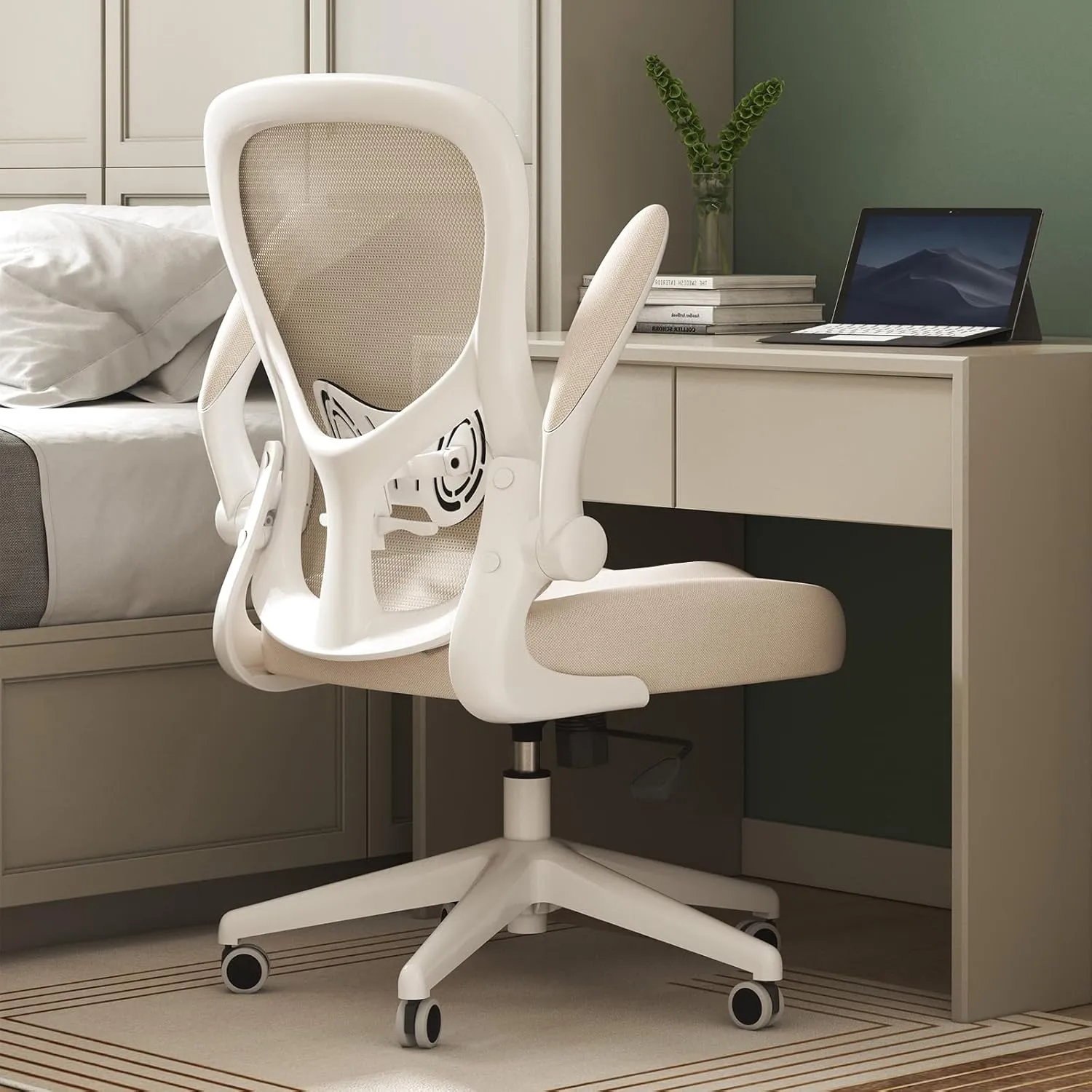
This Hbada model keeps things simple: flip-up arms, lumbar support, adjustable height, and a lower price than the better-known Sihoo options.
Who this review is for
You need a desk chair that does not dominate the room. You want something more supportive than a dining chair, but you do not want the bulk, price, or visual drama of a giant gaming throne.
That is where this Hbada fits. It is a budget ergonomic desk chair with flip-up armrests, lumbar support, adjustable height, and a fairly compact shape. In other words, it is aimed at bedrooms, spare rooms, and setups where the chair cannot be the biggest thing in view.
The footprint is the selling point
The base is smaller than most chairs in this category and the overall shape is less bulky than the Sihoo M57. That makes a difference in a compact room, especially if the chair lives beside a bed or has to tuck under the desk every evening.
With the arms flipped up, we could slide it almost fully under a 50cm deep desk. That one detail saves more space than any marketing copy about "minimal design" ever will.
For desk fit, pair this review with 80cm vs 100cm Desk: Which Is Better for a Small Room? and Small Bedroom Desk Setup Ideas (UK). The chair only feels compact if the desk and walking path leave enough room for the base.
Recommended retailer Check the Hbada chair on AmazonTypical price £111. Opens in a new tab. Check current priceComfort through a normal working day
The seat uses a padded cushion rather than a full mesh base, which gives it a softer first impression than the M57. For the first few hours, that works in its favour. Later in the day, you start to feel that this is still a budget chair and not something designed for marathon sessions.
The backrest is supportive enough for upright desk work and the basic adjustments are easy to dial in. The chair does not do anything clever. It just covers the standard needs most people actually have.
Ergonomics, with one important limit
The chair has the features people look for on the product page: lumbar support, adjustable height, and folding arms. What it does not have is deep adjustability.
The lumbar support is built into the backrest rather than being independently adjustable, so whether it feels helpful or intrusive depends on your height and posture. At around average height it lands in a sensible place. Much taller or shorter, it becomes more of a gamble.
That is the trade-off here. The chair gives you a decent ergonomic baseline at a low price, but it does not let you tune itself around your body the way the Sihoo Doro S100 does.
Build quality
For £111, it is better than expected. The frame feels solid enough, the casters roll cleanly on hard floor, and the materials look decent rather than bargain-bin.
The weak point is the arm assembly. Because the arms fold upward, there is a little play in them even when locked down. It is not a deal-breaker, but if you rest a lot of weight through your elbows you will notice it.
What does not work
All-day comfort for bigger users. If you are broad-shouldered, over about 6 foot 2, or spend eight to ten hours a day at the desk, the chair starts to feel undersized.
The spec-sheet promise. Listings for chairs like this always make them sound equivalent to chairs costing twice as much. They are not. This is a good budget chair, not a hidden premium one.
How it compares
Against the Sihoo M57 (£230), the M57 is better built and far more adjustable, especially around the lumbar area. The Hbada wins on price and on being the easier chair to justify for a second room or smaller setup.
Against the Sihoo Doro S100 (£249), the Doro is the better chair full stop. Better lumbar, better armrests, better movement. Buy it if the budget stretches. The Hbada only makes sense if you want to stay well under £200.
Against the IKEA Markus (£219), the Markus feels more substantial and lasts longer, but it is visually bigger, less adjustable, and harder to fit into a small bedroom setup. For compact rooms, the Hbada is the easier chair to live with.
Where to go next
Continue from this article into the most relevant compact setup guides, reviews, and hubs.
Desk fit
80cm vs 100cm Desk: Which Is Better for a Small Room?
Use the desk-size guide to check whether your chair will have enough room to move.
Read next
Room layout
Small Bedroom Desk Setup Ideas (UK)
Plan the desk, chair, screen, and storage as one small-room setup.
Read next
Chair guide
Best Office Chairs for Small Spaces UK
Compare compact chairs by footprint, arm style, and daily sitting comfort.
Read next