Sihoo Doro S100 Review: Proper Ergonomics Under £250
We put the Sihoo Doro S100 through three weeks of daily work in a small flat. Here's whether the dual lumbar trick is marketing or the real deal.
Who this review is for
You work from home. Your back is wrecked by mid-afternoon. You've priced up a Herman Miller Aeron, had a quiet lie-down about it, and started Googling what a chair should actually do.
This review is for you. It's also for anyone who doesn't want a gaming chair taking up a third of a box room. The Doro S100 is properly ergonomic without the oversized bolstered look, and it lives in a price range where you're choosing between it, the Sihoo M57, and a second-hand Steelcase Leap from eBay.
The lumbar system, explained properly
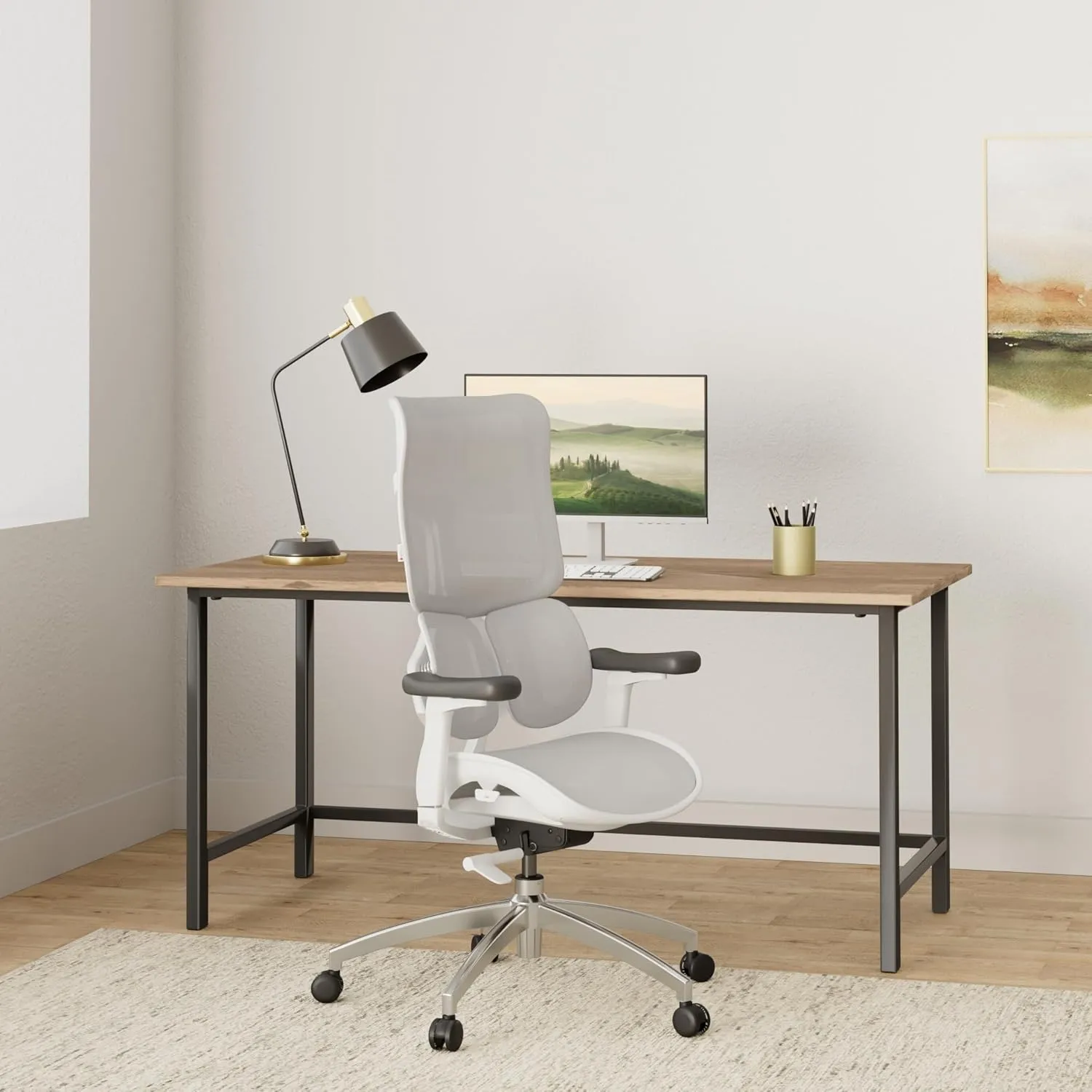
Most chairs give you a fixed lumbar curve, or a single adjustable cushion that you slide up and down and then forget about. The S100 does something different. There are two separate mesh panels in the lower backrest, each mounted on springs. As you shift position, they move independently to keep contact with the two sides of your lower back.
It sounds like marketing, but it's genuinely the standout feature. When you lean left to grab something off the desk, the right panel holds position while the left gives way. Come back to centre and both panels press in evenly. After three weeks I stopped noticing it consciously, which is the best thing a piece of ergonomic kit can do.
Recommended retailer Check the S100 on AmazonTypical price £249. Opens in a new tab. Check current priceFit for a small room
Footprint is 70cm x 70cm at the base. The backrest sits 127cm off the floor at its tallest, which matters if you're rolling it under a shelf or a low-hanging lamp. Seat height ranges from 45cm to 55cm, so it works from about 5'2" upwards comfortably. Above 6'3" you'll want to look at the larger S300 instead.
In the same 2.4m x 2.7m bedroom where we tested the Flexispot E7, the S100 rolls freely in front of the desk with clearance either side for a wardrobe and a bedside table. The wheels glide on carpet without needing a mat.
If the room is tighter than that, start with Small Bedroom Desk Setup Ideas (UK) and check the small office chair hub before choosing a chair with a 70cm base.
What doesn't work
The armrests. Sihoo calls them 4D. They adjust up, forward and back, and rotate inwards at the pad. They do not slide side to side, which is the one direction people with narrower or wider shoulders actually need. It's a fair criticism and the more expensive S300 fixes it.
The other thing: the two lumbar panels are framed in hard plastic. If you sit very upright with a narrow back, the plastic edges can catch around the kidneys after an hour or so. Most people won't notice, but if you've had issues with chairs pressing in the wrong place before, try it for the 30-day return window before committing.
Assembly and build
Out of the box: one large panel, one seat base, five-star wheel base, wheels, gas lift, armrest set, backrest mount, and a small bag of tools. The instruction sheet is the clearest we've seen from a budget-end manufacturer. Allow 30 to 40 minutes if you're on your own, or under 20 with two people. An electric screwdriver helps with the seat-to-backrest bolts but isn't essential.
The gas lift is Class 4 rated, the five-star base is metal rather than plastic, and the whole thing weighs 22kg assembled. That weight is what makes it feel stable at full recline. Cheaper chairs in the sub-£150 bracket creak; this one doesn't.
How it compares
Against the IKEA Markus (£219), the Doro S100 wins on armrest adjustability and lumbar support. The Markus wins on build reputation and the fact you can sit in one at the store before you buy.
Against the Sihoo M57 (£159), the S100 gives you the dual lumbar system and a mesh seat for £80 more. If you run warm or sit for more than six hours a day, it's worth the difference. If not, save the money.
Against a refurbished Steelcase Leap (£450 to £600 on eBay), you're spending half as much for something that's newer, comes with a warranty, and doesn't smell of someone else's office. The Leap is still a better chair in absolute terms, but the gap isn't 2x.
Where to go next
Continue from this article into the most relevant compact setup guides, reviews, and hubs.
Desk fit
80cm vs 100cm Desk: Which Is Better for a Small Room?
Use the desk-size guide to check whether your chair will have enough room to move.
Read next
Room layout
Small Bedroom Desk Setup Ideas (UK)
Plan the desk, chair, screen, and storage as one small-room setup.
Read next
Chair guide
Best Office Chairs for Small Spaces UK
Compare compact chairs by footprint, arm style, and daily sitting comfort.
Read next